Great Gardeners — Recycling and Sustainability
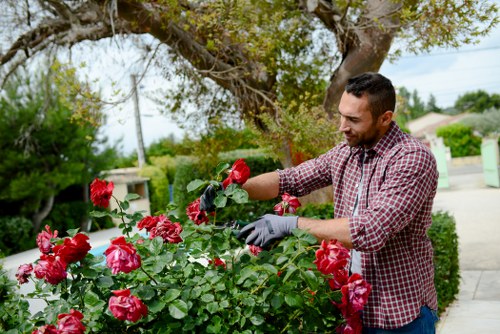 Great Gardeners is committed to creating an eco-friendly waste disposal area and promoting a sustainable rubbish gardening area across all our sites. Our approach brings together practical on-site recycling, partnerships with local civic amenities and charities, and a low-carbon transport strategy. We treat garden waste as a resource: woody debris becomes mulch, green cuttings feed local composting systems, and dismantled planters are repaired or repurposed rather than sent to landfill.
Our work reflects common boroughs' recycling models where residents and services separate waste into food, garden, glass, paper and mixed recyclables. We align with local authority separation policies so that materials collected from client properties enter the correct processing streams at municipal transfer stations. By designing an efficient eco waste disposal area at each project hub we reduce cross-contamination, improve material quality and support higher recycling yields.
![A woman with long, light brown hair and glasses is kneeling on a wooden patio in a lush garden, surrounded by vibrant greenery and flowering plants. She is wearing a casual grey t-shirt and dark jeans, and appears to be engaged in gardening activity. In front of her is a large terracotta pot filled with leafy green plants, and a pink watering can is placed nearby. The garden features a variety of plants and shrubs, with tall bushes and trees providing shade and a natural backdrop. The scene is brightly lit, suggesting a sunny day, with the outdoor space well-maintained and suitable for gardening and outdoor relaxation, aligning with services offered by Great Gardeners in the local area near the [POSTCODE] in [TOWN].](/pub/_photos/gardening/f1377320960.jpg) We have set a clear recycling percentage target: 75% diversion of garden and related household waste from landfill by 2028. This target covers compostable green waste, wood and branch material reused asmulch or biochar feedstock, textiles and small fixtures refurbished for reuse, and recyclable plastics and metals routed to appropriate facilities. To meet this goal we monitor throughput, contamination rates and recovery percentages against quarterly benchmarks, adjusting processes when needed.
We have set a clear recycling percentage target: 75% diversion of garden and related household waste from landfill by 2028. This target covers compostable green waste, wood and branch material reused asmulch or biochar feedstock, textiles and small fixtures refurbished for reuse, and recyclable plastics and metals routed to appropriate facilities. To meet this goal we monitor throughput, contamination rates and recovery percentages against quarterly benchmarks, adjusting processes when needed.
Local Transfer Stations and Processing
The backbone of a robust sustainable garden waste area is access to local transfer stations and civic amenity sites. We coordinate collections to municipal transfer points where materials can be consolidated and sent to specialist processors for composting, shredding or recycling. Our operations use designated bays for:
- Green waste — sent to in-vessel or open-windrow composting facilities;
- Hard wood and timber — routed for chipping and reuse as mulch;
- Mixed recyclables — co-mingled or pre-sorted depending on borough policy.
Working within the boroughs' approaches to waste separation helps ensure that, for example, food-waste collections and separate glass streams remain uncontaminated by garden waste. Where local councils operate a fortnightly garden bin or subscription service, we integrate collection timing to maximise compatibility and minimise double handling.
Partnerships with Charities and Community Projects
![A woman wearing a pink and white checkered shirt, black gardening trousers, and white gardening gloves is kneeling in a well-maintained garden, tending to a variety of ornamental plants and shrubs. The garden features a lush green backdrop with dense foliage, including neatly trimmed hedges and a mixture of flowering plants and leafy bushes with yellow, purple, and green tones. The soil bed is dark and well-tilled, with a defined border separating it from the vibrant grass lawn, which has a uniform, healthy appearance. In the background, there are additional garden elements such as plant borders and small flowering shrubs, with natural daylight illuminating the scene under slightly overcast weather conditions, creating soft shadows. The setup reflects professional garden care practices, aligning with local landscaping and gardening services offered by Great Gardeners in the area surrounding [POSTCODE] or [TOWN], emphasizing sustainable gardening and outdoor maintenance approaches.](/pub/_photos/gardening/f1392619520.jpg) Partnerships are central to our sustainability model. We collaborate with local charities that refurbish tools and donate planters, with community food projects that accept compost and with landscaping social enterprises that train people in green skills. Key activities include:
Partnerships are central to our sustainability model. We collaborate with local charities that refurbish tools and donate planters, with community food projects that accept compost and with landscaping social enterprises that train people in green skills. Key activities include:
- Tool refurbishment partnerships that extend the life of hand tools and reduce buy-new demand;
- Compost-sharing schemes where finished compost is distributed to urban farms and community allotments;
- Material donation — surplus soil, brick pavers and timber are offered to charities and reuse networks.
In neighbourhoods where council policy allows separate collections, we adopt the same separation protocols on-site: paper and card and glass go into recycling; green food and garden waste go into composting streams; and, where possible, we reclaim wood and stone for reuse. This reduces contamination and increases the value of materials delivered to communal transfer stations. Our site managers are trained to spot contamination and to use simple signage and colour-coded containers to keep streams clean.
![A smiling young woman in a blue cap, matching T-shirt, and striped apron stands in a greenhouse or garden centre environment, holding a gardening tool while wearing protective gloves. Behind her, rows of green plants, shrubs, and hanging baskets are visible, with bright natural light filtering through the glass roof, creating a vibrant and welcoming atmosphere. The garden space showcases neatly organized flower beds and potted plants, with some areas having soil beds and others with textured paving. The lush greenery features a variety of foliage, and the overall scene reflects a well-maintained and professionally managed outdoor environment, suitable for gardening services focused on sustainability and eco-friendly practices in the local area near [TOWN] or the [POSTCODE]. The setting emphasizes garden maintenance, plant care, and sustainable gardening techniques, aligning with the services provided by Great Gardeners. The weather appears sunny and clear, enhancing the natural tones and colours of the plants and garden surfaces.](/pub/_photos/gardening/f1386577920.jpg) We also run a sustainable rubbish gardening area program that includes on-site chipping, a small-scale screening station for topsoil enhancement and a return-to-site service for compost and mulch. These systems are designed to be modular so they can be scaled to fit densely populated boroughs or suburban service areas. The result is less haulage, reduced transport emissions and more materials retained locally.
We also run a sustainable rubbish gardening area program that includes on-site chipping, a small-scale screening station for topsoil enhancement and a return-to-site service for compost and mulch. These systems are designed to be modular so they can be scaled to fit densely populated boroughs or suburban service areas. The result is less haulage, reduced transport emissions and more materials retained locally.
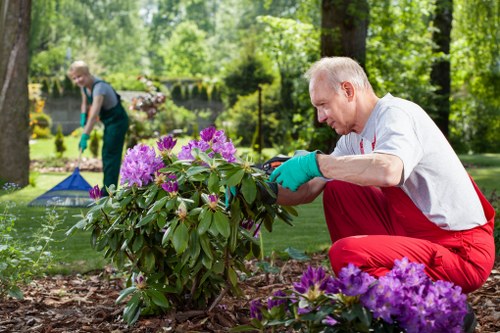 Transport is a major element of our low-carbon promise. Our fleet includes low-carbon vans — electric and plug-in hybrids where charging infrastructure permits — and a programme of route optimisation to cut mileage. We use telematics to manage vehicle efficiency and schedule multi-stop rounds that reduce empty runs. In addition, we are trialling biofuel blends for heavier plant equipment to lower lifecycle emissions where electrification is not yet viable.
To measure progress towards our eco-friendly waste disposal area ambitions we track the following KPIs: percentage recycled (target 75%), tonnes of green waste converted to compost or mulch, tonnes of material donated to charities, and net transport emissions. We publish internal sustainability reports that compare outcomes against borough benchmarks and adjust operations to close gaps.
Our teams deliver benefits beyond recycling numbers: improved soil health from returned organic matter, reduced procurement of virgin materials through reuse, and strengthened local networks via charity collaborations. We aim to create resilient, circular local supply chains where a trimmed hedge today becomes the compost and mulch that feeds the garden beds of tomorrow.
Great Gardeners believes a practical, accountable and community-focused approach to an sustainable rubbish gardening area is the fastest path to greener neighbourhoods. By combining clear targets, smart logistics, local transfer station use, charity partnerships and a low-carbon van fleet, we turn garden waste into renewed value and measurable environmental benefit.