Lawn Mowing in London

Great Gardeners provides lawn mowing in London for homes, shared gardens and managed outdoor spaces that need tidy, even cutting and sensible ongoing care. The service is centred on practical grass-cutting work rather than showy promises, with attention to finish height, edges and the condition of the lawn as a whole. For many customers, the value lies in keeping growth under control, improving the look of the garden and making regular maintenance easier to manage.
We support straightforward mowing visits as well as broader garden maintenance where grass cutting sits alongside lighter seasonal care. That can suit lawns that need a simple regular cut, tidying after a pause in maintenance, or help keeping front and rear gardens presentable through the growing season. Healthy-looking grass usually depends on consistent cutting, but the right approach also depends on access, season, lawn type and how much growth has built up since the previous visit.
For customers who want to compare options and organise the next step, pricing and quotes gives a clear route to request a quotation. If you are looking for a practical lawn care service in London, you can use the form of enquiry that suits you best and ask for the level of attention your garden needs.
Regular grass cutting for tidy, manageable lawns

Routine lawn mowing is the core service for many gardens, especially where the grass grows quickly and needs regular attention to keep it neat. A careful mow is not only about reducing height; it is also about producing a consistent finish, avoiding missed strips and leaving the lawn ready for daily use. Depending on the garden, that may include setting the mower to a sensible cutting level, trimming awkward sections and keeping the result balanced across the space.
Good grass-cutting work also considers the edges. A neat border can make a modest lawn look far more settled, even where the shape is irregular or the garden has planting beds, paving or narrow side access. We aim to work methodically so the cut fits the space rather than forcing it into a generic pattern. If the garden includes soft ground, ornamented areas or fragile surfaces, the method should be adapted rather than rushed.
Where mowing is part of a wider routine, some customers also look at related services such as grass cutting for straightforward lawn care across different garden layouts. The key decision is usually whether the lawn simply needs maintenance or whether it first needs a little more attention to bring it back into order.
Overgrown lawns and one-off tidy-up work

Some lawns move beyond routine maintenance and need a more gradual reset. Grass that has been left for too long can flatten, clump or grow unevenly, which makes a single heavy cut less suitable than a measured approach. In those cases, mowing should be handled carefully so the lawn is not stressed unnecessarily. The finish may need more than one pass at a suitable level, especially where growth is dense or the garden has uneven ground.
A one-off tidy-up is often about restoring control before regular maintenance begins again. That may involve attention around trees, borders, paths and hidden corners where growth tends to collect. It can also mean deciding whether the lawn is in a condition where an ordinary mow is enough or whether it would benefit from further work later on. We keep the work focused on what the lawn can reasonably take, rather than cutting too hard and leaving the surface thin or patchy.
If you want to broaden the work beyond mowing, the wider gardening services page can help you see how lawn care sits within a fuller outdoor maintenance plan. A sensible next step is often to send the basic details once, then ask for the most suitable approach for the level of growth that is actually there.
Lawn edges, shape and finishing details

A well-cut lawn often looks better because of the finishing work around it. Edges along paving, fencing, beds and walls can soften the whole appearance if they are allowed to blur, while clean lines make the space feel maintained without needing major changes. That is why the mowing service should be judged on the finish as well as on the height of the grass. A precise cut can make a modest garden feel ordered, even when the layout is simple.
Some gardens contain awkward sections where a standard mower cannot easily reach. Narrow runs, sloping patches and tight corners often need a more careful sequence of work so the result stays even. In those situations, it is useful to think about access and layout before the visit. One clear description of the garden usually helps more than a long explanation, especially if the lawn is split into more than one area or shares space with paths, shrubs or sheds.
For customers who want a more general overview of related work, services overview can be used to see how different garden tasks are grouped together. If you are ready to move forward, ask for a quotation once the lawn size and condition are clear, so the response can reflect the actual work involved.
Additional garden care that supports a mowing visit
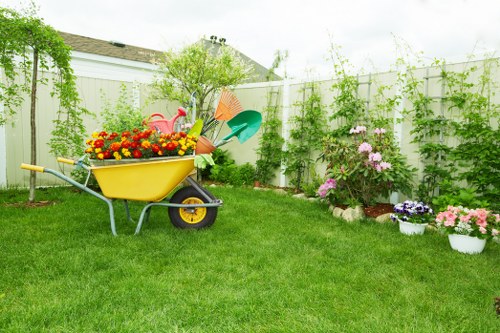
Although mowing is the main service here, some gardens benefit from light supporting work at the same time. That may include short grass clearance around paths, a little tidying where cuttings have gathered, or attention to areas that affect how the lawn is used. The purpose is not to turn a mowing visit into a full redesign, but to make the grass cut more useful and the garden easier to enjoy afterwards. Small complementary tasks can improve the overall result when they are clearly relevant.
When customers are deciding what to include, it helps to separate essential mowing from optional extras. A practical list can be useful: regular cut, overgrown lawn recovery, edging, light tidying and any access notes that affect the work. That keeps the enquiry focused and prevents unnecessary guesswork. If other garden tasks are needed later, they can often be considered separately rather than bundled into the mowing request itself. This keeps the job clear and the quotation easier to understand.
Where a broader garden tidy is required, related pages such as garden services can help place mowing within a fuller maintenance plan. You can also request a quotation when you are ready to outline the work and get a response based on the garden you have, not a generic example.
Choosing the right lawn care approach
Different lawns call for different cutting decisions, and a sensible service should reflect that. Fine ornamental grass, family lawns used heavily, shaded lawns and areas that dry out quickly do not always respond in the same way. The same is true of gardens with uneven growth, where one side may need more attention than another. A good mowing plan takes the state of the lawn into account instead of treating every patch of grass as identical.
When planning the work, it is helpful to think about what matters most: appearance, regular upkeep, recovery after a gap, or keeping the grass short enough for everyday use. Those priorities shape the method as much as the size of the garden does. In a simple residential setting, a neat and even cut may be enough. In a more complex garden, the finish may need a little more time around the edges or in awkward sections to make the result consistent.
For customers who want a broader read on lawn-related work, the lawn mowing services page is a useful next stop within the site. If you are comparing options, you can also make a short note of what the lawn looks like now and what result you want, then ask for a quotation without adding unnecessary detail.
Preparing a useful enquiry
Good enquiries tend to be concise but specific. A few practical details usually matter most: the approximate lawn size, whether the grass is currently maintained or overgrown, any awkward access, and whether the mowing is needed once or on a repeat basis. That information gives a more realistic basis for pricing than a vague request, while still keeping the process easy for the customer. It also helps the work feel planned rather than improvised.
Photos can be useful when a lawn is difficult to describe, but they are best used to clarify the layout rather than to replace a proper explanation of the job. If the garden includes steps, side passages, narrow gates or mixed surfaces, mention those points clearly. For a straightforward lawn, a short description may be enough. The aim is simply to match the mowing method to the garden, not to create a long questionnaire.
If you want to talk through the next step, about us explains more about the business background, while the quotation route remains the most direct way to discuss your mowing requirements. The best time to enquire is when you can describe the lawn plainly and say what kind of finish you would like.
What affects mowing costs
The price of lawn mowing depends on practical factors rather than a fixed formula. Garden size, grass height, how dense the growth is, access around the property and the amount of finishing work all influence the time needed. A small, even lawn may be straightforward, while a larger or more neglected one can require a slower and more careful approach. Clear information at the start usually leads to a better matched quotation.
Other details can also matter. If the lawn is broken into sections, has uneven ground or includes borders that need more edging, that changes the work involved. So does the frequency of visits: a regular cut may be simpler to maintain than a one-off recovery mow. It is sensible to think in terms of the actual task in front of the gardener rather than only the overall shape of the garden. That gives a more reliable basis for discussion.
For customers who want to understand how estimates are handled more generally, pricing and quotes is the natural page to review. When you are ready, simply ask for a quotation and include the main facts about the lawn; that is usually enough to start the conversation properly.
Related outdoor work alongside lawn care
Some customers prefer to organise several garden tasks together so the outside space feels settled in one visit or over a single period of maintenance. Where that is appropriate, mowing may sit beside lighter work such as hedge attention, clearance of small amounts of debris or help with keeping paths and edges presentable. The key is that each task should be clearly separate in scope, so the quotation reflects exactly what is being asked for.
A lawn often looks best when the surrounding parts of the garden are not competing with it. That does not mean every job has to be completed at once, but it does mean customers can think about the garden as a whole. If other work is needed later, it can be planned without losing sight of the original mowing requirement. Keeping each part distinct also makes it easier to decide what should happen now and what can wait.
Where a wider tidy-up is being considered, pages such as garden clearance may be helpful if the space has more than grass to address. For a simpler job, a clear mowing request is enough, and you can always come back to additional tasks later if the garden needs them.
About London
London is a city with a layered urban landscape shaped by centuries of growth, redevelopment and cultural exchange. The River Thames remains one of its defining features, curving through the centre and linking districts whose identities have developed in different ways over time. Historic areas such as the City of London, Westminster and Southwark sit alongside newer commercial and residential quarters, while the city’s parks and commons provide important open space within a dense built environment. Green areas such as Hyde Park, Regent’s Park, Hampstead Heath and Greenwich Park are part of the city’s wider character, offering contrasts to the streets of terraced houses, apartment blocks, markets and office districts. London’s transport network, including the Underground, buses and rail termini, has long influenced the way neighbourhoods connect and develop. Architecture ranges from medieval fragments and Georgian terraces to Victorian civic buildings, post-war estates and contemporary towers, making the city visually varied even within short distances. Cultural life is equally broad, with theatres, galleries, museums, music venues and sports grounds spread across its boroughs. Markets, local high streets, churchyards and riverside walks add smaller-scale landmarks to the larger metropolitan picture. The city’s history is visible not only in famous monuments but also in street patterns, place names and the mix of uses found in different quarters. As a result, London is best understood as a collection of distinctive places linked by a shared capital identity rather than as a single uniform centre.
Keeping your lawn in better condition
Once a lawn is under control, the main challenge is usually keeping it that way with the right frequency of attention. Regular mowing supports a cleaner appearance and avoids the stop-start cycle that can leave grass uneven or stressed. Seasonal growth patterns, weather and use all affect how often a lawn needs cutting, so a sensible schedule is often more useful than a rigid promise. The aim is to maintain a finish that matches the garden and the way it is used.
There are times when grass looks best with a lighter approach, especially if the lawn is dry, newly recovering or showing signs of wear. In other cases, a more definite cut is needed to bring shape back to the garden. The point is not to force a single rule onto every situation, but to adapt the work to the condition of the grass at the time. That is what gives a mowing visit value beyond a quick trim.
If you are ready to arrange the work, request a quotation and share the basic details of the lawn. A clear enquiry is the simplest way to get the right response, and it helps ensure the service matches the garden rather than the other way round.


